

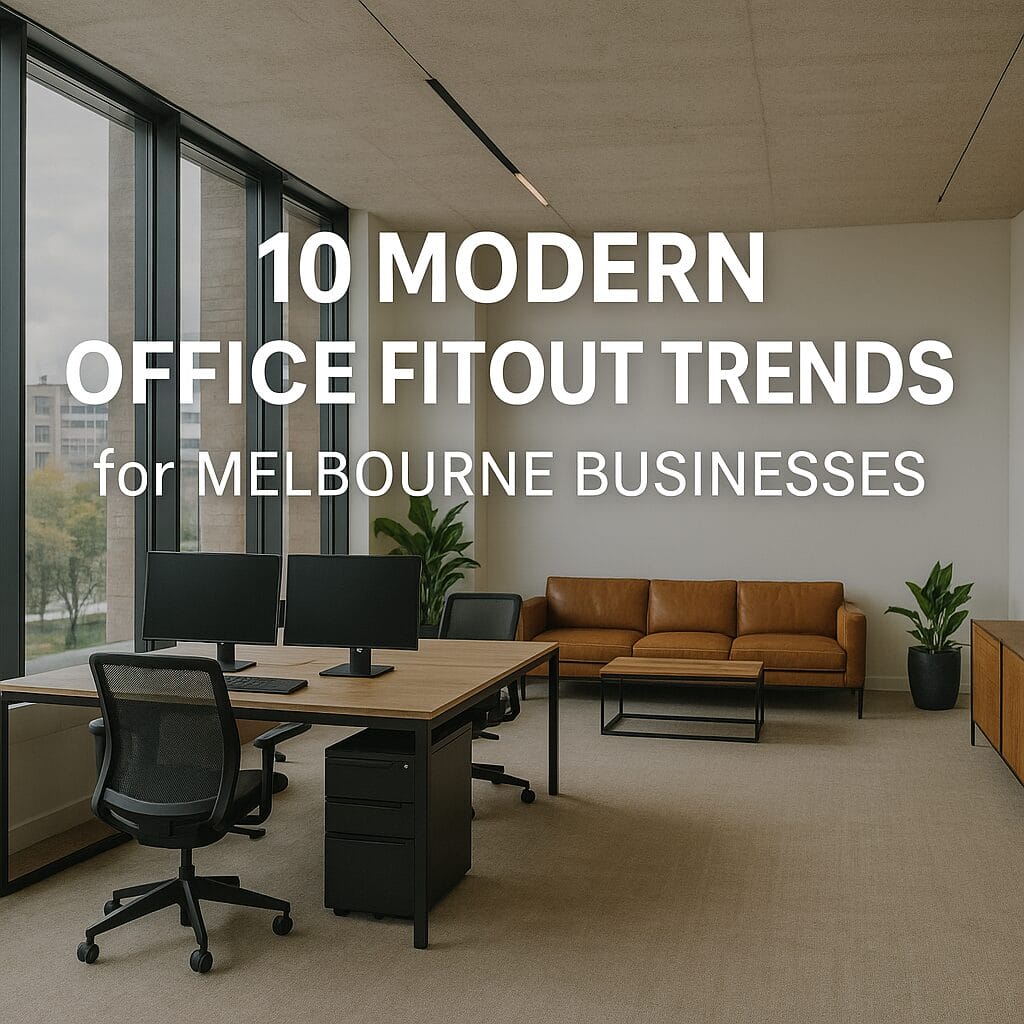
1. Hybrid-ready, activity-based workspaces
Traditional rows of fixed desks are giving way to activity-based layouts that support different ways of working. Instead of one-size-fits-all workstations, modern offices combine focused work zones, collaboration areas, quiet rooms and informal breakout spaces. Key elements:- Fewer fixed desks, more shared workpoints and hot-desking.
- Bookable focus rooms for deep work and confidential calls.
- Collaboration zones with writeable surfaces and digital screens for workshops.
2. People-first design with wellbeing at the centre
Employee wellbeing is now a commercial priority, not a nice-to-have. Modern office fitouts in Melbourne use design to support mental and physical health, which in turn improves productivity and retention. Common features:- Access to natural light and views wherever possible.
- Ergonomic furniture and height-adjustable workstations.
- End-of-trip facilities and change rooms to encourage cycling or walking.
- Quiet reflection spaces away from the buzz of open-plan areas.
3. Biophilic design and natural materials
In many Melbourne office towers—especially older assets—biophilic elements must also be coordinated with fire systems, mechanical air paths and landlord rules. Early coordination avoids expensive redesign later. Biophilic elements can include:- Planter boxes, living walls and potted trees in communal areas.
- Timber joinery, acoustic panels and feature ceilings.
- Natural colour palettes inspired by Australian landscapes.
4. Technology-enabled collaboration
Fitouts must support seamless collaboration between in-office and remote team members. Modern meeting rooms and collaboration zones now prioritise audio-visual quality, connectivity and ease of use. Key tech trends:- Rooms equipped with high-quality cameras and microphones for video calls.
- Wireless screen sharing so anyone can present from their laptop or device.
- Digital whiteboards for capturing workshop output and sharing it instantly.
- Room booking systems with live occupancy information.
5. Sustainable and future-ready fitouts
Sustainability is now a baseline expectation in commercial projects. Landlords, tenants and investors are increasingly aware of environmental performance, waste reduction and lifecycle costs. Sustainable fitout strategies often include:- Reusing existing partitions, ceilings and services where feasible.
- Selecting low VOC paints, certified timbers and durable finishes.
- Designing for future flexibility to extend the life of the fitout.
- Considering energy-efficient lighting and building services upgrades.
6. Strong brand expression and storytelling
Modern fitouts are a powerful way to express your brand. Melbourne organisations increasingly use interior design to tell their story, rather than relying solely on signage or logos. Brand-led design might include:- Reception and client areas increasingly incorporate finishes that reflect brand identity, while remaining practical, durable and fully coordinated with building services. This helps maintain a professional client-facing standard without introducing unnecessary complexity.
- Custom joinery, signage and graphic walls that reference your history or values.
- Display spaces for products, project imagery or community stories.
- Wayfinding that feels consistent with your brand tone.
7. Flexible, modular furniture and layouts
With changing headcounts and hybrid work patterns, businesses want fitouts that can adapt without major building works. Modular furniture systems and flexible planning make this easier. Typical solutions:- Demountable screens and modular workstations that can be reconfigured quickly.
- Mobile whiteboards, storage units and acoustic screens.
- Multi-purpose spaces that can switch from training to town hall to project room.
8. Focus on acoustic comfort and privacy
Open-plan offices can be noisy and distracting if not carefully designed. Modern fitout briefs now place far more weight on acoustic comfort and privacy, especially for professional services, health and technology clients. Practical measures include:- Meeting rooms and focus rooms with acoustic doors and glazing.
- Acoustic ceiling tiles, wall panels and soft furnishings to absorb sound.
- Planning noisy areas (like kitchens and collaboration zones) away from focused workpoints.
- Phone booths or small pods for confidential calls.
9. Client-ready front-of-house and lobby upgrades
First impressions matter. Many Melbourne buildings and tenants are investing in lobby upgrades and front-of-house fitouts to match the quality of their brand and the expectations of visitors. Common lobby upgrade trends:- Upgraded flooring, lighting and reception desks to create a premium entry.
- Clear wayfinding and digital directories for multi-tenant buildings.
- Comfortable waiting areas with power and data for visitors.
- Integration of art, feature lighting or local materials.
10. Specialist sector fitouts: healthcare, hospitality and retail
Many Melbourne businesses operate in sectors where compliance, customer experience or specialist equipment drive unique fitout requirements. Modern projects increasingly combine sector-specific needs with contemporary office design. Examples include:- A modern office fitout can support comfort, experience and engagement when aligned with how your teams work.
- Hospitality and café fitouts integrated into office lobbies or workplace hubs.
- Retail-style showrooms inside workplaces for product demonstration and client events.
How these trends support Melbourne businesses
Adopting these trends is not about following fashion. Done well, a modern office fitout can:- Improve staff attraction, retention and engagement.
- Support hybrid and flexible work without wasting space.
- Impress clients, investors and partners from the moment they walk in.
- Help the fitout stay relevant for longer by planning for future changes.
- Align your workplace with safety, wellbeing and sustainability expectations.
Why choose O’Neill’s Design & Construction for your office fitout?
O’Neill’s Design & Construction specialises in tier-3 commercial projects, with a focus on office refurbishments, lobby upgrades and tenant fitouts across Melbourne and an expanding presence in Brisbane. The team understands that every project must balance design, budget, programme and building constraints. When you work with O’Neill’s Design & Construction, you can expect:- A design-and-construct approach that keeps responsibility with one accountable head contractor from concept to handover.
- Clear programming and communication so your business can keep operating with minimal disruption.
- Practical, buildable design solutions that respect existing services and building limitations.
- A focus on safety, compliance and quality, backed by real project experience across office, education, government and specialist environments.
- Fit-for-purpose solutions that reflect your brand and support your people, not just current trends.
Ready to modernise your workplace?
Talk to O’Neill’s Design & Construction about an office fitout that supports your people, reflects your brand and works within your budget. Whether you are planning a full office relocation, a staged refurbishment or a lobby upgrade, the team can guide you from early feasibility through to a delivered space your stakeholders are proud of.Frequently asked questions
How long does an office fitout in Melbourne usually take?Timeframes vary depending on size, complexity and approvals, but many small to mid-sized office fitouts run anywhere from 6 to 16 weeks once design is locked in and permits are in place. Programming will also consider building rules, noisy work restrictions and any staged occupation requirements.
What budget should we allow per square metre for a modern fitout?
Indicative rates range from basic refreshes through to premium, highly bespoke spaces, and take into account services upgrades, joinery, furniture and finishes. A feasibility study is the best way to confirm a realistic range for your specific building and scope.
Can we keep our team working in the office during the fitout?
In many projects, works can be staged floor-by-floor or area-by-area to keep critical operations running. This may involve temporary swing spaces, after-hours work and careful coordination with building management to maintain safety and access.
Do we need building permits or approvals for an office fitout?
Many commercial fitouts require some level of approval, which may include building permits or landlord consent. Your building surveyor or certifier can confirm what applies. O’Neill’s Design & Construction can coordinate the required documentation as part of a design-and-construct contract.
What is the difference between a refurbishment and a full fitout?
A refurbishment usually refreshes finishes, lighting and some layout elements within an existing structure, while a full fitout can involve major re-planning, new services, joinery and front-of-house changes. Refurbishments can be a cost-effective way to update a space without completely starting again.
How do hybrid and activity-based layouts affect our space requirements?
Hybrid and activity-based planning can reduce the number of fixed desks while adding more variety in collaboration and focus spaces. In some cases, businesses may be able to accommodate more staff or activities in the same footprint by planning workpoints around real utilisation patterns.
Can we incorporate sustainability targets into our fitout brief?
Yes. Sustainability can be addressed through re-use of existing elements, material selections, energy-efficient systems and design decisions that extend the life of the fitout. These strategies can support wider ESG or building performance goals.
What makes a fitout “future-ready”?
Future-ready fitouts allow for reconfiguration without major demolition. This might mean using modular furniture, planning for additional cabling pathways, and designing multi-purpose spaces that can support different teams or uses over time.
How important is acoustic treatment in a modern office?
Acoustic comfort is important in open workplaces, particularly for teams handling confidential or complex work. Thoughtful use of acoustic ceilings, wall panels, soft furnishings and room positioning can significantly improve concentration and reduce noise complaints.
When should we engage a fitout contractor in our planning?
Engaging a design-and-construct partner early – ideally at lease negotiation or test-fit stage – helps identify risks, confirm realistic budgets and align your programme with building constraints. Early involvement usually leads to fewer surprises and smoother delivery.