

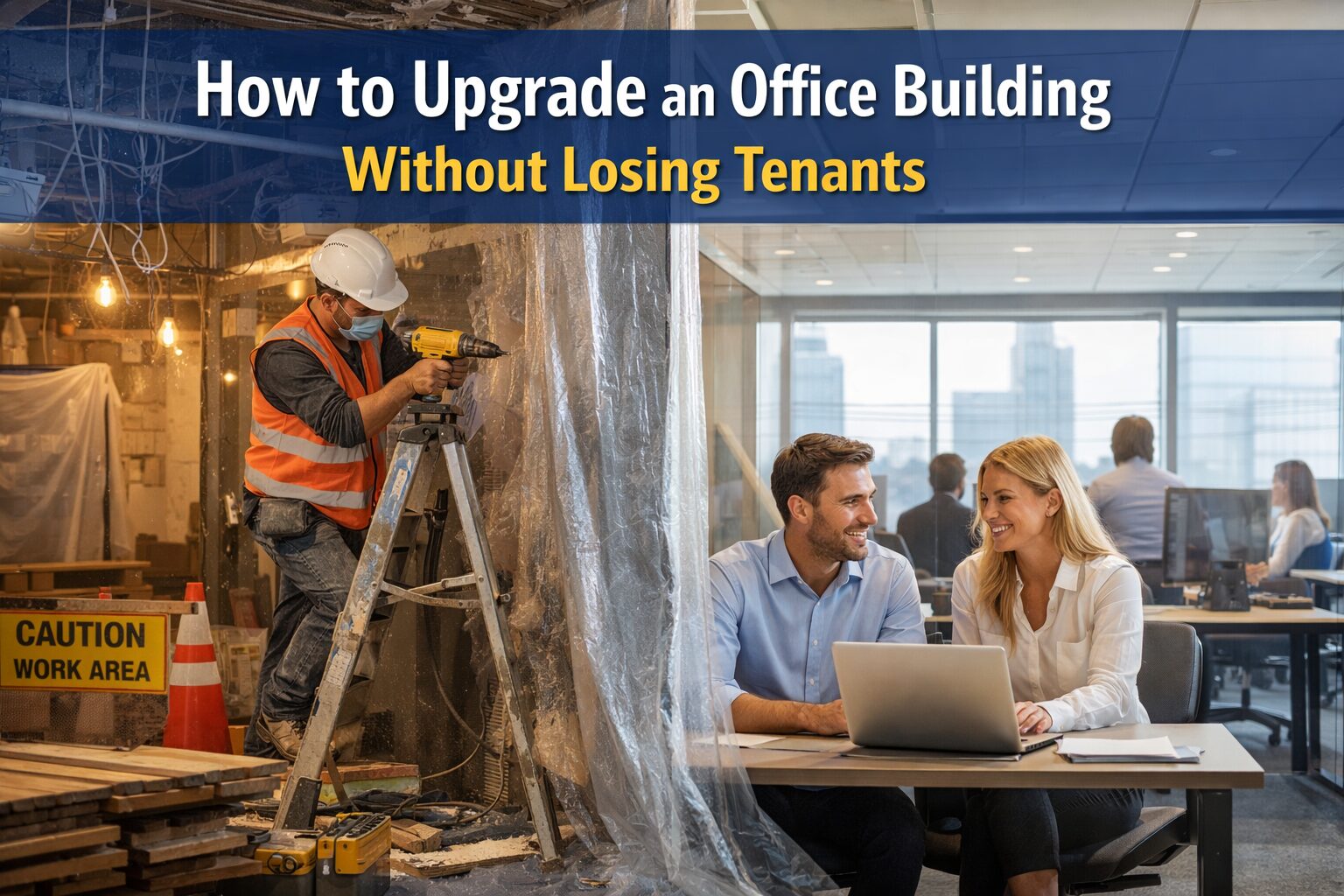
For building owners and asset managers, upgrades improve asset value, modernise facilities and maintain competitiveness in the commercial leasing market. However, poorly managed construction can disrupt tenant operations and increase the risk of vacancy.
The most successful building upgrades focus on improving the building while ensuring tenants can continue operating with minimal disruption.
This guide explains how to upgrade an office building with tenants in place and how building owners can protect both tenant relationships and long-term asset performance.
What Is an Office Building Upgrade With Tenants in Place?
An office building upgrade with tenants in place is a refurbishment strategy where improvements are completed while tenants continue operating in the building. Construction works are staged and carefully managed to minimise disruption to businesses.
This approach allows building owners to modernise facilities, improve amenities and increase asset value without forcing tenants to temporarily relocate or terminate leases.
Why Office Building Upgrades Are Necessary
Commercial office buildings require periodic upgrades to remain competitive and attractive to tenants.
Older buildings often struggle to meet modern expectations for workplace design, technology infrastructure and shared amenities. Without upgrades, buildings risk becoming less appealing compared to newer developments.
Strategic upgrades can include improved lobby areas, upgraded services, modern amenities and improved workplace environments. These improvements can significantly enhance tenant satisfaction while increasing the long-term value of the asset.
Many building owners undertake refurbishment projects specifically to improve building performance. This guide on commercial office refurbishments that increase asset value explains how upgrades influence leasing demand and asset value.
Start With a Feasibility and Upgrade Strategy
Successful building upgrades begin with careful planning.
Before construction begins, building owners should conduct a feasibility assessment to understand project scope, costs, timelines and potential tenant impact. This early planning stage helps determine how works can be staged and how disruptions can be minimised.
Feasibility studies also help identify structural limitations, compliance requirements and design opportunities within the building.
Professional planning services such as project management and feasibility studies allow building owners to evaluate upgrade strategies before committing to construction.
A clear strategy ensures the building remains operational throughout the project.
Prioritise High Impact Areas First
When upgrading an occupied building, it is often best to begin with areas that deliver the greatest improvement with the least disruption.
Shared areas such as lobbies, amenities and common circulation spaces typically have the greatest impact on tenant experience.
Lobby upgrades in particular can dramatically improve the perception of a commercial building. These projects are usually completed in defined stages that allow tenants to continue using the building during construction.
For example, this guide on how to renovate an office lobby on budget explains how building owners can improve entry spaces while maintaining functionality.
Improving these shared spaces creates immediate value without interfering with individual tenant workplaces.
Use Staged Construction to Minimise Disruption
Staged construction is the most effective method for upgrading occupied office buildings.
Instead of renovating the entire building at once, works are divided into phases. Each stage focuses on a particular area while other areas remain operational.
For example, a building may upgrade one floor of amenities at a time or refurbish lobby areas during off-peak hours.
Staging construction allows building owners to control noise levels, maintain building access and ensure tenants can continue operating normally.
Many refurbishment projects are delivered using a coordinated design and construct approach that integrates design, planning and construction into a single delivery model.
This improves project coordination and reduces delays in occupied environments.
Understand the Difference Between Tenant and Landlord Works
Building upgrades often involve both landlord works and tenant works.
Landlord works focus on shared building infrastructure such as common areas, lifts, services and amenities. Tenant works involve the design and fitout of individual office spaces.
Understanding this distinction helps building owners upgrade the base building without interfering with tenant fitouts.
If you want to understand how these responsibilities are divided, this guide explains tenant fitout vs landlord fitout in detail.
This clarity helps prevent project conflicts and delays.
Communicate Clearly With Tenants
Tenant communication is essential during any refurbishment project.
Even well planned upgrades can cause frustration if tenants are not informed about construction timelines or building access changes.
Building owners should communicate the construction schedule well before work begins. Tenants should understand which areas will be affected, what hours construction will occur and how long each phase will take.
Providing regular updates during the project helps maintain transparency and ensures tenants can plan around the construction activity.
Clear communication builds trust and reduces complaints during the project.
Manage Compliance and Safety Requirements
Office building upgrades must comply with Australian building regulations and safety standards.
Compliance requirements may include fire safety upgrades, accessibility improvements, building services upgrades and structural compliance.
Failure to address compliance early can lead to costly delays or redesigns during construction.
This guide on compliance requirements for commercial office fitouts in Australia explains many of the regulatory considerations that apply to refurbishment projects.
Building owners should also refer to national building standards provided by the Australian Building Codes Board when planning upgrades.
Ensuring compliance early protects both tenants and project timelines.
Improve Amenities to Increase Tenant Retention
Modern tenants expect more than just office space.
Shared amenities play an increasingly important role in tenant satisfaction and retention. Improvements such as end-of-trip facilities, upgraded kitchens, collaborative spaces and wellness areas can make a building significantly more attractive.
These upgrades can transform older buildings into modern workplaces that support productivity and employee wellbeing.
Many of these ideas align with current workplace design strategies discussed in modern office fitout trends for Melbourne businesses.
When amenities improve, tenant satisfaction typically increases.
Consider Cost and Project Timing
Cost planning and timeline management are critical when upgrading occupied buildings.
Construction schedules must be coordinated with tenant operations, which may extend timelines compared to vacant building projects. However, staged delivery allows owners to maintain rental income during construction.
Understanding refurbishment costs early helps building owners make informed decisions about scope and staging.
This guide on commercial office fitout costs explained for building owners provides a detailed overview of the financial considerations involved.
Owners should also review typical project timelines outlined in this guide on office fitout timelines from feasibility to handover.
Clear budgeting and scheduling help prevent delays and unexpected costs.
Work With Contractors Experienced in Occupied Buildings
Upgrading a building while tenants remain inside requires specialised construction expertise.
Contractors must coordinate works around tenant operations, manage safety in active environments and minimise disruptions to building access.
Experienced commercial builders understand how to schedule noisy works outside business hours, isolate construction zones and maintain building functionality throughout the project.
Teams specialising in building upgrades and refurbishments are familiar with the complexities of working within occupied commercial buildings.
Their experience helps ensure the project progresses smoothly while protecting tenant relationships.
Conclusion
Upgrading an office building without losing tenants requires strategic planning, staged construction and strong communication.
When building owners prioritise tenant experience while improving the building, refurbishment projects can increase both asset value and tenant satisfaction.
Careful planning allows upgrades to be delivered while businesses continue operating normally. The result is a stronger, more competitive commercial asset.
Talk to an Expert About Your Building Upgrade
If you are planning to upgrade an office building and want to minimise disruption to existing tenants, professional planning and construction management are essential.
O’Neill’s Design & Construction specialises in commercial refurbishments and staged upgrades for occupied office buildings across Melbourne.
Speak with the team through the contact page to discuss your project and explore the best upgrade strategy for your building.
FAQs
Can an office building be upgraded while tenants are still occupying it?
Yes. Office buildings can be upgraded while tenants remain in place when works are staged carefully. Construction is typically divided into phases so tenants can continue operating while improvements are completed.
What are the biggest risks when upgrading an occupied office building?
The biggest risks include operational disruption, tenant dissatisfaction, safety concerns and project delays. These risks can be reduced through detailed planning and staged construction.
What upgrades have the biggest impact on tenant satisfaction?
Upgrades to shared spaces such as lobbies, amenities, kitchens and end-of-trip facilities usually have the greatest impact on tenant experience.
How long does an office building refurbishment usually take?
Timelines vary depending on project scope. Smaller upgrades may take several months while larger refurbishments can take over a year when staged around tenant operations.
Do building upgrades increase rental value?
Yes. Upgraded buildings typically achieve higher rental rates and stronger tenant retention because they offer improved amenities and modern facilities.
What is staged construction in building refurbishments?
Staged construction divides the project into phases so only certain areas are renovated at a time. This reduces disruption and allows tenants to continue using the building.
Are tenants responsible for refurbishment costs?
Tenants are usually responsible for their own office fitouts, while landlords are responsible for base building upgrades and shared areas.
How can building owners minimise disruption during upgrades?
Disruption can be reduced by scheduling works outside peak hours, isolating construction zones and maintaining clear communication with tenants.
What compliance issues apply to office building upgrades?
Projects must comply with building codes, fire safety regulations, accessibility standards and other regulatory requirements.
Why is contractor experience important for occupied buildings?
Experienced contractors understand how to manage construction in active environments, ensuring safety and minimal disruption for tenants.