

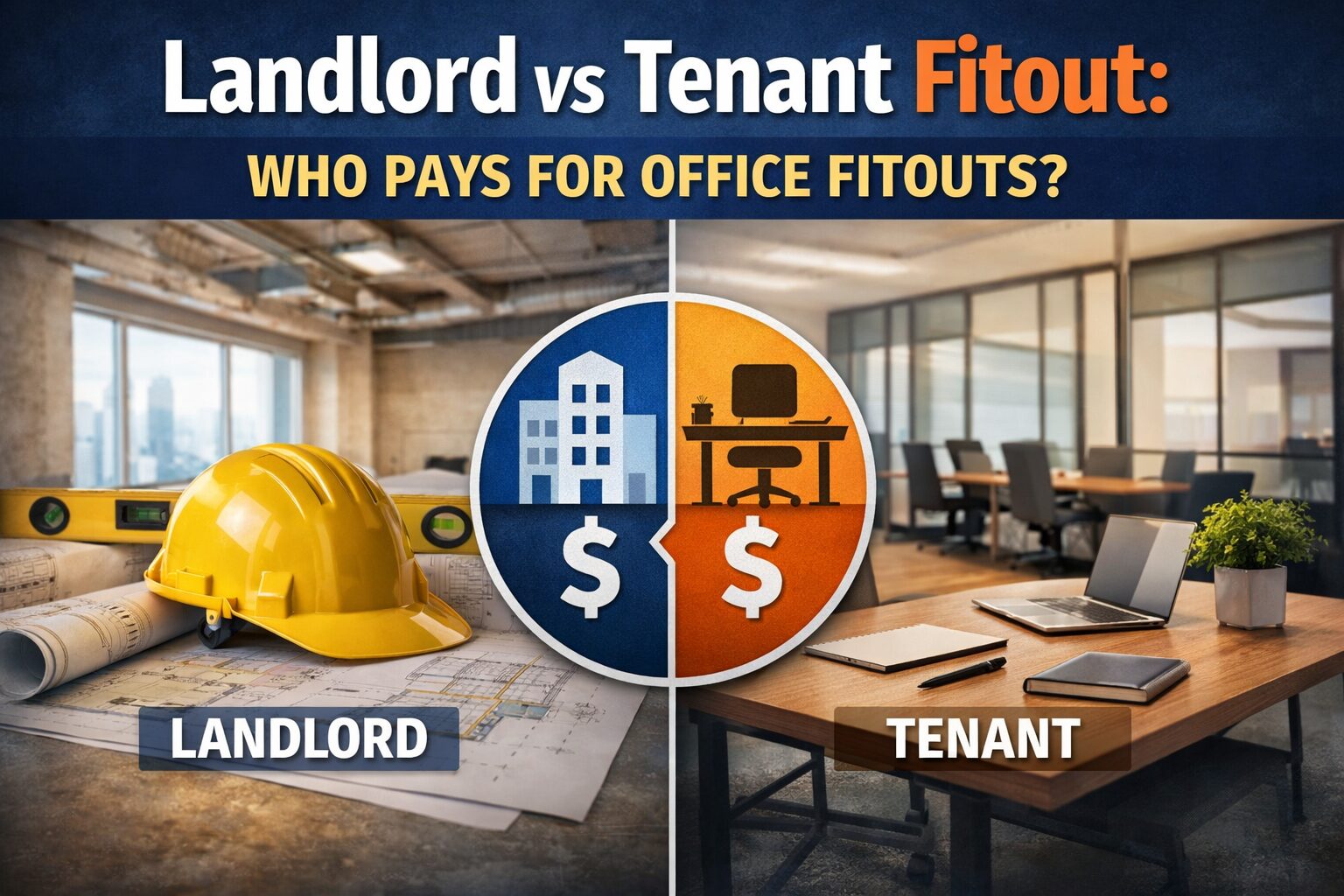
However, the exact responsibilities depend on the lease agreement, building condition at handover, and any tenant fitout incentives negotiated during leasing.
Understanding landlord vs tenant fitout responsibility is essential before signing a lease. Many commercial office projects run over budget because tenants assume certain building services are included when they are not.
Clear expectations about who funds each component of the project help avoid disputes, delays, and unexpected construction costs.
Landlord vs Tenant Fitout Responsibilities at a Glance
The difference between landlord and tenant responsibilities usually relates to whether the work benefits the building as a whole or the tenant’s specific business operations.
| Fitout Element | Landlord Responsibility | Tenant Responsibility |
| Structural building elements | ✓ | |
| Base HVAC infrastructure | ✓ | |
| Fire protection systems | ✓ | |
| Lifts and common areas | ✓ | |
| Internal partitions | ✓ | |
| Workstations and furniture | ✓ | |
| Meeting rooms | ✓ | |
| Reception and branding | ✓ | |
| IT and AV systems | ✓ |
This division may change depending on lease negotiations and tenant fitout contributions.
What Is a Landlord Fitout?
A landlord fitout refers to work completed by the building owner to prepare a commercial space for leasing.
These works usually involve the base building infrastructure that supports all tenants in the property.
Typical landlord responsibilities include:
- Structural components such as floors and ceilings
- Base mechanical systems such as HVAC plant
- Building fire protection systems
- Lift access and shared amenities
- Building façade and envelope
Building owners also invest in upgrades that increase the long term value and attractiveness of the asset. Projects such as lobby upgrades and shared facility improvements can significantly improve tenant demand.
You can explore examples of these asset improvements in this guide on commercial office refurbishments that increase asset value.
What Is a Tenant Fitout?
A tenant fitout is the interior construction that transforms an empty commercial space into a functional workplace designed for a specific organisation.
Tenant fitouts are tailored to the operational needs of the business occupying the space.
Typical tenant fitout works include:
- Internal partitions and meeting rooms
- Workstations and office furniture
- Reception areas and branding
- Lighting and power layouts
- Data cabling and IT infrastructure
If you want a deeper explanation of this distinction, see tenant fitout vs landlord fitout: what’s the difference.
Base Building vs Warm Shell vs Cold Shell
The condition of the space when it is handed over to the tenant significantly affects fitout responsibilities.
Cold Shell
A cold shell is an empty space with minimal services installed. It usually includes structural elements, external walls, and limited mechanical systems.
Tenants must install most internal infrastructure.
Warm Shell
A warm shell includes some internal services such as ceilings, lighting, and mechanical distribution.
This reduces the amount of construction required during the tenant fitout.
Fully Fitted Spaces
In some cases, landlords deliver partially completed office spaces to attract tenants more quickly.
Understanding the starting condition of the tenancy is essential for estimating costs. If you want a deeper breakdown of typical budgets, see how much does an office fitout cost in Melbourne.
What Is a Tenant Fitout Contribution?
Many commercial leases include a tenant fitout contribution, which is financial support provided by the landlord to help fund internal construction works.
This incentive helps landlords attract tenants while allowing businesses to create a workspace tailored to their operations.
Fitout contributions may be structured as:
- A lump sum contribution toward construction costs
- A rent free period during the fitout stage
- A negotiated allowance per square metre
Fitout incentives play a significant role in project budgeting and should be considered alongside construction costs.
Why Lease Agreements Define Fitout Responsibilities
While general industry practices exist, the lease agreement ultimately determines who pays for each component of the fitout.
Commercial leases typically define:
- Base building conditions at handover
- Scope of landlord works before occupation
- Tenant responsibilities for internal construction
- Make good obligations at lease expiry
This is why many companies involve contractors early in the planning process. Early feasibility assessments help identify service limitations and cost risks before leases are finalised.
Learn more about this approach in early contractor involvement in office fitouts