

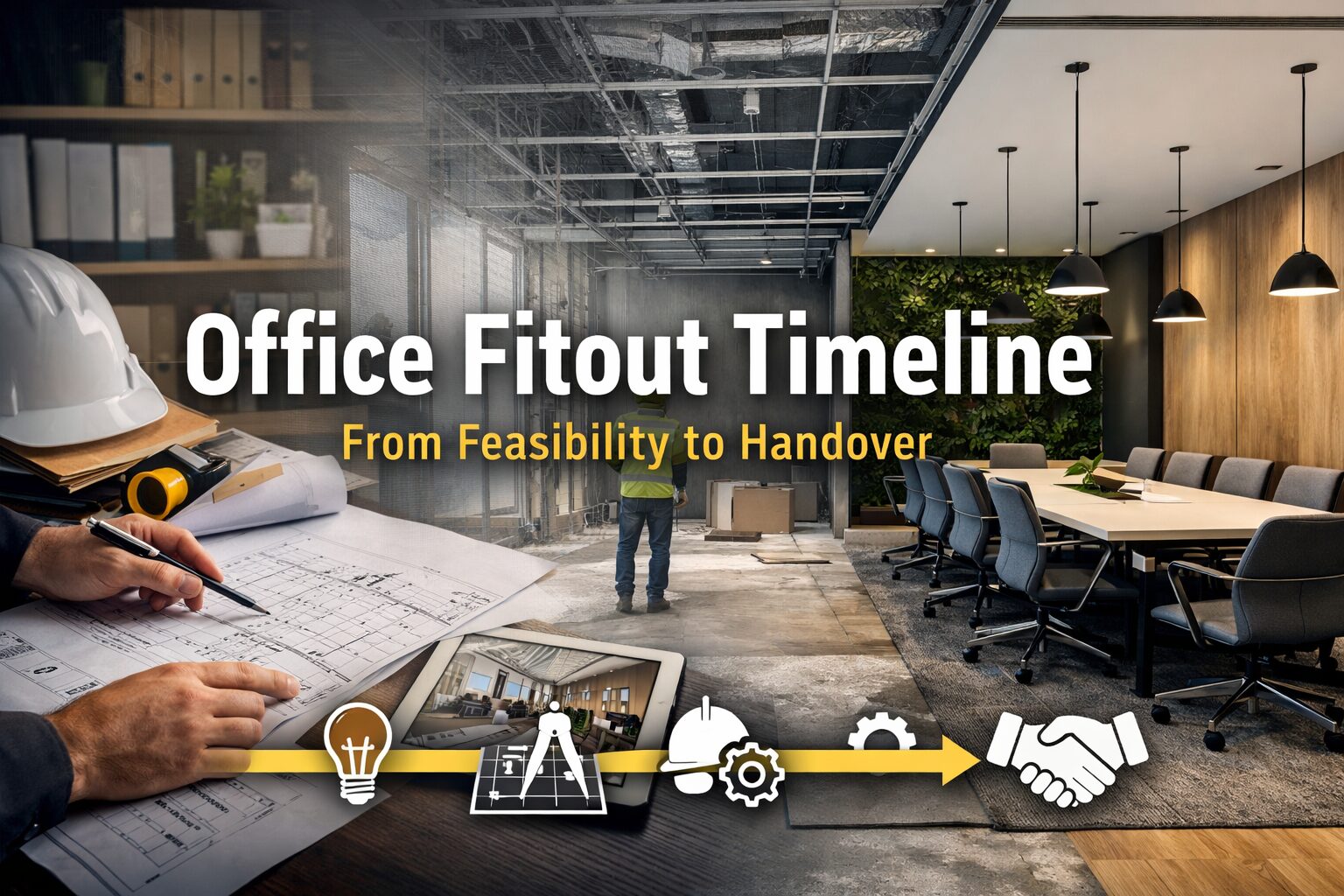
For many businesses, uncertainty around timing is one of the biggest concerns. When will approvals be needed? How long will construction take? When can staff move in? Having delivered commercial office fitouts across Melbourne and Brisbane, O’Neill’s Design & Construction approaches fitout delivery with a structured, end-to-end process that provides clarity from day one.
While every project is different, most office fitouts follow a consistent sequence from early feasibility through to final handover. Knowing what happens at each stage allows decision-makers to plan with confidence and engage the right expertise early.
Stage 1: Feasibility and Workplace Planning
The fitout timeline begins well before construction. The feasibility stage focuses on understanding whether the space, budget, and programme align with business objectives.This stage typically includes workplace strategy discussions, test fits, early services reviews and high-level cost planning. It answers fundamental questions around capacity, layout efficiency, operational adjacencies and future growth.
For most projects, feasibility takes one to three weeks depending on complexity and decision speed. Early engagement with a contractor during feasibility helps identify buildability issues and budget risks before they escalate.
Businesses seeking clarity at this stage often benefit from reviewing guidance in The Complete Guide to Office Fitouts in Melbourne, which outlines how early planning decisions impact cost and delivery outcomes.
Stage 2: Concept and Detailed Design
Once feasibility is confirmed, the project moves into design. This phase translates business requirements into layouts, finishes, services coordination and documentation suitable for approval and construction.Concept design establishes the overall direction of the workplace. Detailed design resolves materials, joinery, lighting, mechanical systems and compliance requirements. A well-resolved design phase reduces variation risk during construction and shortens the overall build programme.
Design typically runs for four to eight weeks depending on project scale and approval pathways. Engaging a contractor with in-house design capability or early contractor involvement ensures that design decisions remain practical, cost-effective and buildable.
More information on this process is available through Office Fit-Out Design services, which focus on aligning workplace design with construction realities.
Stage 3: Approvals and Landlord Consent
Approvals are one of the most variable elements in an office fitout timeline. Most commercial buildings require landlord approval before works commence. Building permits, fire engineering sign-off and services approvals may also be required.Approval timeframes range from two to six weeks (Landlord and authority pathways can materially extend this), sometimes longer if documentation is incomplete or multiple stakeholders are involved. Early coordination with building management and certifiers is critical to maintaining programme certainty.
Understanding regulatory requirements early helps prevent construction delays later. For authoritative guidance on permits and compliance in Victoria, the Victorian Building Authority provides clear information on commercial building approvals.
Stage 4: Procurement and Construction
With approvals in place, the project moves into procurement and construction. This stage includes site establishment, demolition where required, services installation, partitions, ceilings, joinery, finishes and final fit-off.Construction timelines vary significantly based on floor area, complexity and staging requirements. As a general guide, small office refurbishments may take six to eight weeks, while larger or multi-floor projects can extend to twelve to twenty weeks. Joinery, feature lighting, glazing and HVAC components can drive programme if not ordered early.
Clear programming, disciplined site management and regular communication are essential to maintaining momentum. As a head contractor delivering fitouts under a Design and Construct model, O’Neill’s coordinates all trades, consultants and compliance requirements under one contract.
Stage 5: Testing, Commissioning and Handover
The final stage of the office fitout timeline focuses on quality assurance and readiness for occupation. Mechanical, electrical, fire and communications systems are tested and commissioned. Defects are addressed, and compliance certificates are issued.Handover typically includes as-built documentation, warranties and operational manuals. A structured handover process ensures the workplace is safe, compliant and ready for staff to move in without disruption.
This stage usually takes one to two weeks and is critical to achieving a smooth transition into the new space.
How Long Does an Office Fitout Take Overall?
From feasibility to handover, most office fitouts are completed within three to six months. Smaller refurbishments may be delivered faster, while complex or highly regulated projects may require additional time. The most significant factors influencing timeline are approval durations, decision-making speed and early planning quality.Engaging a contractor early and adopting a coordinated Design and Construct approach helps compress timelines and reduce risk.
Frequently Asked Questions
How long does an office fitout usually take?Most office fitouts take between three and six months from initial feasibility to handover, depending on size, approvals and complexity.
What happens during the feasibility stage?
Feasibility defines project objectives, confirms spatial viability, develops early budgets and identifies risks before design or approvals commence.
Do all office fitouts require landlord approval?
Yes. Most commercial buildings require landlord consent and base building approvals before construction can begin.
Can design and construction run at the same time?
Under a Design and Construct model, elements of design and procurement can overlap, helping reduce overall project duration.
What causes delays in office fitout projects?
Common delays include slow approvals, late design changes, long lead items and unclear decision-making authority.
Is it better to engage a contractor early?
Early contractor involvement improves cost certainty, buildability and programme reliability.
What is included in the handover?
Handover includes commissioning, compliance certificates, warranties, as-built documentation and defect resolution.
Can a fitout be staged while staff remain onsite?
Yes, but it requires careful planning, safety management and clear communication to minimise disruption.
How can I reduce timeline risk?
Clear briefing, early approvals coordination and engaging a single accountable head contractor significantly reduce risk.
Ready to Plan Your Office Fitout?
If you are considering an office fitout in Melbourne or Brisbane, early planning is the key to controlling time, cost and outcomes. O’Neill’s Design & Construction delivers structured, end-to-end office fitouts as a head contractor, from feasibility through to handover.To discuss your project timeline or request expert advice, speak with the team today via the Contact Us page.