

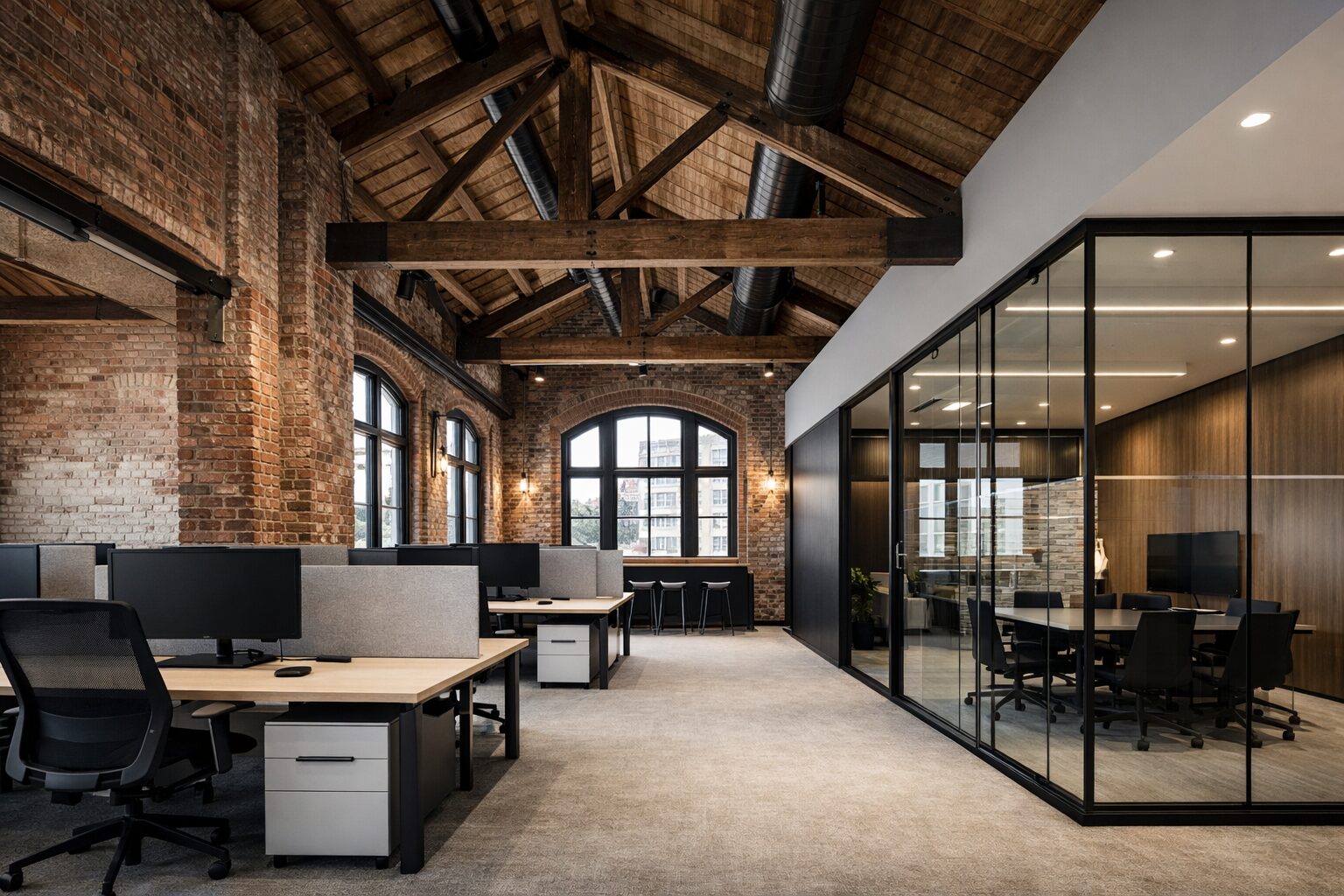
In Melbourne and Brisbane, many CBD and fringe commercial buildings fall under heritage overlays or character controls. When executed properly, a heritage office fitout can significantly increase asset value, attract premium tenants and future-proof an ageing building without compromising its historical integrity.
This guide explains what is involved, what it costs, and how to approach a heritage commercial office fitout the right way.
What Is a Heritage Office Fitout?
A heritage office fitout is the internal upgrade or reconfiguration of a heritage-listed or older commercial building to meet modern workplace standards while retaining protected features.This typically involves:
- Preserving façades, structural beams, heritage windows or original brickwork
- Upgrading fire, mechanical and electrical systems
- Improving accessibility to meet current building codes
- Reconfiguring layouts for contemporary office use
Projects of this nature demand a contractor experienced in both compliance and buildability. Our team regularly delivers complex works involving heritage building and facade restoration alongside modern commercial upgrades.
Key Challenges in Office Fitouts for Heritage and Older Commercial Buildings
1. Planning Approvals and Heritage Compliance
Most heritage office fitouts require:- Planning permits
- Heritage impact assessments
- Detailed design documentation
- Consultation with council or heritage advisors
For regulatory guidance, refer to the National Construction Code.
2. Unknown Existing Conditions
Older commercial buildings frequently conceal:- Asbestos
- Inadequate fire separation
- Ageing services
- Structural limitations
3. Integrating Modern Workplace Requirements
Tenants expect:- High-performance HVAC
- Acoustic control
- Data and technology infrastructure
- Flexible collaboration zones
- Energy-efficient systems
How to Plan an Office Fitout in a Heritage Building
For asset owners and end users, the safest pathway follows a structured process:Step 1: Conduct a Heritage and Services Audit
Identify protected elements and assess structural and service conditions.
Step 2: Engage a Design & Construct Contractor Early
Align design intent, authority requirements and build methodology from day one.
Step 3: Prepare Heritage Impact Documentation
Work with planners and consultants to secure council approvals.
Step 4: Finalise Compliance Strategy
Ensure fire safety, accessibility and building code requirements are integrated into the design.
Step 5: Deliver with Controlled Construction Sequencing
Protect heritage elements during demolition and installation to prevent damage and delays.
Following this framework reduces program risk and improves cost certainty.
How Much Do Heritage Office Fitouts Cost?
Office fitouts for heritage and older commercial buildings typically cost more than standard fitouts due to:- Specialist consultant input
- Authority approvals
- Services replacement or upgrades
- Structural strengthening
- Compliance rectification
Timeframes may also extend due to approvals. Our breakdown of the office fitout timeline from feasibility to handover outlines each stage in detail.
Why Heritage Office Fitouts Increase Asset Value
When strategically delivered, heritage commercial office upgrades can:- Increase rental yields
- Improve tenant retention
- Extend asset lifespan
- Enhance ESG performance
- Differentiate the building in competitive markets
For building owners seeking broader repositioning, consider integrated building upgrades and refurbishments that align long-term asset strategy with compliance and tenant demand.
Melbourne and Brisbane Market Considerations
In Melbourne, CBD heritage overlays require early authority engagement and structured documentation. Bourke Street and surrounding commercial precincts frequently involve façade retention and internal reconfiguration.In Brisbane, older commercial buildings in riverfront and inner-city precincts present structural and services challenges, particularly when upgrading ageing infrastructure.
Whether delivering an office fitout in Melbourne or expanding into Brisbane’s growing commercial market, local planning knowledge and commercial experience are critical.
Choosing the Right Contractor for a Heritage Office Fitout
Not all contractors are equipped to manage heritage and older commercial buildings. When selecting a partner, look for:- Demonstrated experience in heritage restoration
- Proven Design & Construct capability
- Early contractor involvement processes
- Strong authority and consultant coordination
- Transparent cost planning
Frequently Asked Questions
What approvals are required for a heritage office fitout?Most heritage office fitouts require planning approval under local heritage overlays. This may include heritage impact assessments, council permits and compliance documentation before construction begins.
Are heritage office fitouts more expensive?
Yes. Additional approvals, specialist consultants and services upgrades typically increase upfront costs. However, improved rental yield and asset value often justify the investment.
Can you modernise a heritage building without removing character features?
Yes. Modern HVAC, lighting and workstations can be integrated while preserving original brickwork, beams and façades through careful design detailing.
How long does a heritage commercial fitout take?
Programs vary depending on scope and approvals. Authority processes can extend timelines beyond standard office fitouts.
Is Design & Construct better for heritage projects?
In many cases, yes. Design & Construct aligns consultants and builders early, reducing approval risk and budget uncertainty.
What happens if asbestos is discovered?
Licensed removal specialists manage remediation in accordance with regulations. Early investigations reduce unexpected delays.
Can heritage buildings meet modern accessibility standards?
Yes. Lifts, ramps and accessible amenities can often be integrated without compromising protected elements.
Do heritage upgrades improve leasing appeal?
Yes. Character buildings with modern performance systems often attract premium tenants seeking distinctive workplaces.
Are these projects suitable for end users?
Absolutely. Many end users prefer heritage environments that reflect brand identity while offering modern functionality.
Can older commercial buildings achieve energy efficiency targets?
Yes. Strategic upgrades to glazing, lighting and mechanical systems can significantly improve performance without altering protected façades.
Planning an Office Fitout in a Heritage or Older Commercial Building?
Heritage office fitouts require precision, compliance knowledge and commercial experience.O’Neills Design & Construction delivers Design & Construct and lump sum commercial projects across Melbourne and Brisbane, including complex upgrades in heritage and ageing commercial assets.
If you are considering a heritage commercial office fitout, speak with our team via our Contact Us page or explore our recent commercial projects to see how we approach technically demanding environments.
A heritage building should not limit performance. With the right strategy, it can become your strongest commercial asset.