

Design for Flexibility from Day One
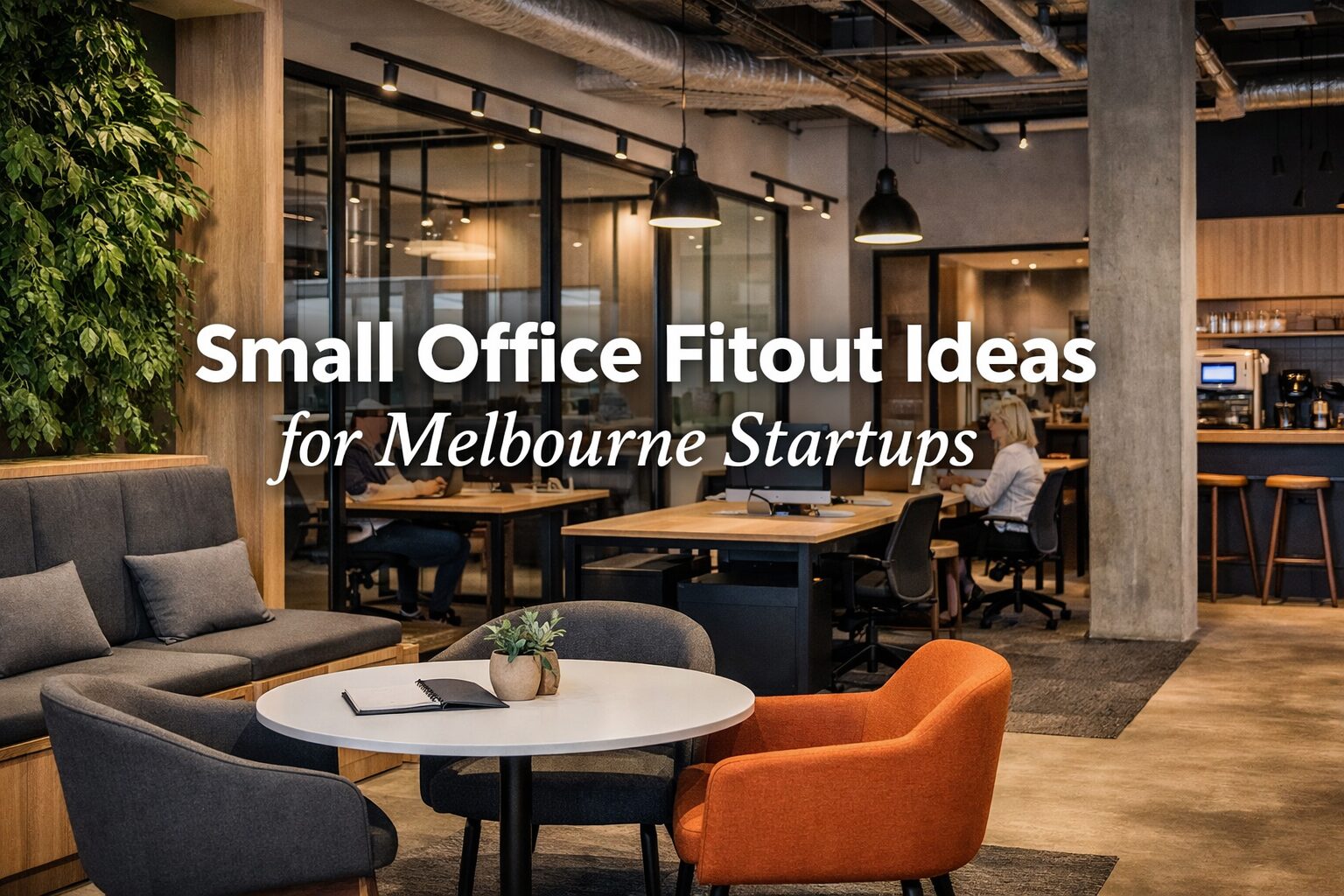
Startups change quickly. Headcount grows, team structures shift and ways of working evolve. Fixed layouts can become obsolete within a short period, forcing businesses into costly rework. Flexible planning is essential for small offices. Open work areas paired with a limited number of enclosed rooms generally provide the best balance. Glass partitions are commonly used in Melbourne offices to maintain natural light while allowing future reconfiguration. Modular joinery and adaptable furniture systems also make it easier to adjust layouts as teams grow. During the design phase of an office fitout, future expansion should be considered even if growth is not immediate. Planning services, power and data capacity upfront helps avoid disruptive upgrades later.Maximise Every Square Metre
In small offices, inefficient use of space directly impacts both productivity and rent value. Smart fitout design focuses on reducing wasted areas while maintaining comfort and circulation. Integrated storage, wall-mounted joinery and multi-purpose spaces help keep work areas clear and functional. Collaboration zones can double as informal meeting spaces, reducing the need for multiple enclosed rooms. In many Melbourne buildings, ceiling height and services coordination also play a role in making compact spaces feel more open and usable. A professional office fitout contractor will assess how to extract maximum functionality from the tenancy rather than forcing a generic layout into a constrained footprint.Reflect Brand and Culture Without Overspending
For startups, the office is often a key touchpoint for staff, investors and clients. Even within a small space, thoughtful design can communicate professionalism and identity. Brand expression does not require expensive finishes. Carefully selected colours, textures and lighting can reinforce brand values while keeping costs under control. Feature elements should be used strategically rather than throughout the space to avoid visual clutter and unnecessary expense. Melbourne startups competing for skilled talent benefit from workplaces that feel intentional, well considered and aligned with how their teams operate.Prioritise Comfort, Acoustics and Productivity
Small offices can feel crowded if acoustics, lighting and air quality are overlooked. Noise control is particularly important in open plan environments, where poor acoustic treatment can reduce focus and increase fatigue. Lighting design should balance natural and artificial light to support productivity throughout the day. Mechanical and electrical systems must also be sized appropriately to support current operations and anticipated growth. Undersized services often become a hidden cost as teams expand. A well managed office fitout integrates these elements early rather than treating them as afterthoughts.Understand Compliance and Building Requirements
Many Melbourne office spaces require upgrades to meet current building codes and tenancy requirements. Fire services, accessibility, base building coordination and approvals are common considerations during a fitout. Engaging a head contractor with experience in commercial fitouts helps ensure compliance issues are identified early. This reduces approval delays and minimises the risk of unexpected costs during construction. O’Neill’s delivers office fitouts under a Design and Construct model, coordinating consultants, approvals and construction under one contract. Learn more about our commercial office fitouts in Melbourne here: https://www.oneillsdc.com.au/office-fitouts-melbourne/ For broader refurbishment and compliance works in live environments, our team also delivers building upgrades and refurbishments across Melbourne.Balance Budget Control with Long Term Value
Startups often operate within tight budgets, but cutting the wrong corners can increase long term costs. Investing in strong planning, core infrastructure and durable finishes usually delivers better value than opting for short term savings. A staged fitout approach is often effective. Essential infrastructure and layout elements are delivered first, with secondary upgrades planned as the business grows. This allows startups to occupy the space quickly while protecting future flexibility. Clear cost planning and realistic programming are critical to achieving this balance.Choose the Right Delivery Partner
Startups benefit from working with contractors who understand speed, budget sensitivity and operational realities. Clear communication, realistic timelines and cost certainty are essential. O’Neill’s Design & Construction is a Tier 3 head contractor delivering office fitouts, refurbishments and lobby upgrades in live commercial environments. Our Design and Construct capability provides a single point of accountability from concept through to completion. Learn more about our approach here: https://www.oneillsdc.com.au/design-construct/ For guidance on commercial building compliance in Victoria, the Victorian Building Authority provides useful information for tenants and owners.Frequently Asked Questions
How much does a small office fitout cost in Melbourne?Costs vary depending on size, scope and level of finish. Small office fitouts can range from light refurbishments to full Design and Construct projects. Early planning helps manage budgets accurately.
How long does a small office fitout usually take?
Most small office fitouts take between six and twelve weeks once approvals are in place. Timeframes depend on complexity and whether the building is occupied.
Is Design and Construct suitable for startups?
Yes. Design and Construct offers cost certainty, faster delivery and a single point of responsibility, which suits growing businesses with limited internal resources.
Can a small office be designed for future growth?
Yes. Flexible layouts, scalable services and modular systems allow offices to adapt as teams expand.
Do Melbourne startups need building permits for office fitouts?
In many cases, yes. Fire services, accessibility and building code upgrades often require approvals. An experienced contractor will manage this process.
What is the most common mistake startups make with office fitouts?
Underestimating future growth and underinvesting in core services such as power, data and acoustics.
Can office fitouts be staged to reduce upfront costs?
Yes. Staging allows essential works to be completed first, with secondary upgrades delivered later.
Do you deliver fitouts in occupied buildings?
Yes. We specialise in delivering works in live commercial environments with minimal disruption.
Should functionality or aesthetics come first?
Functionality should always lead, supported by clean, purposeful design that reflects brand and culture.