

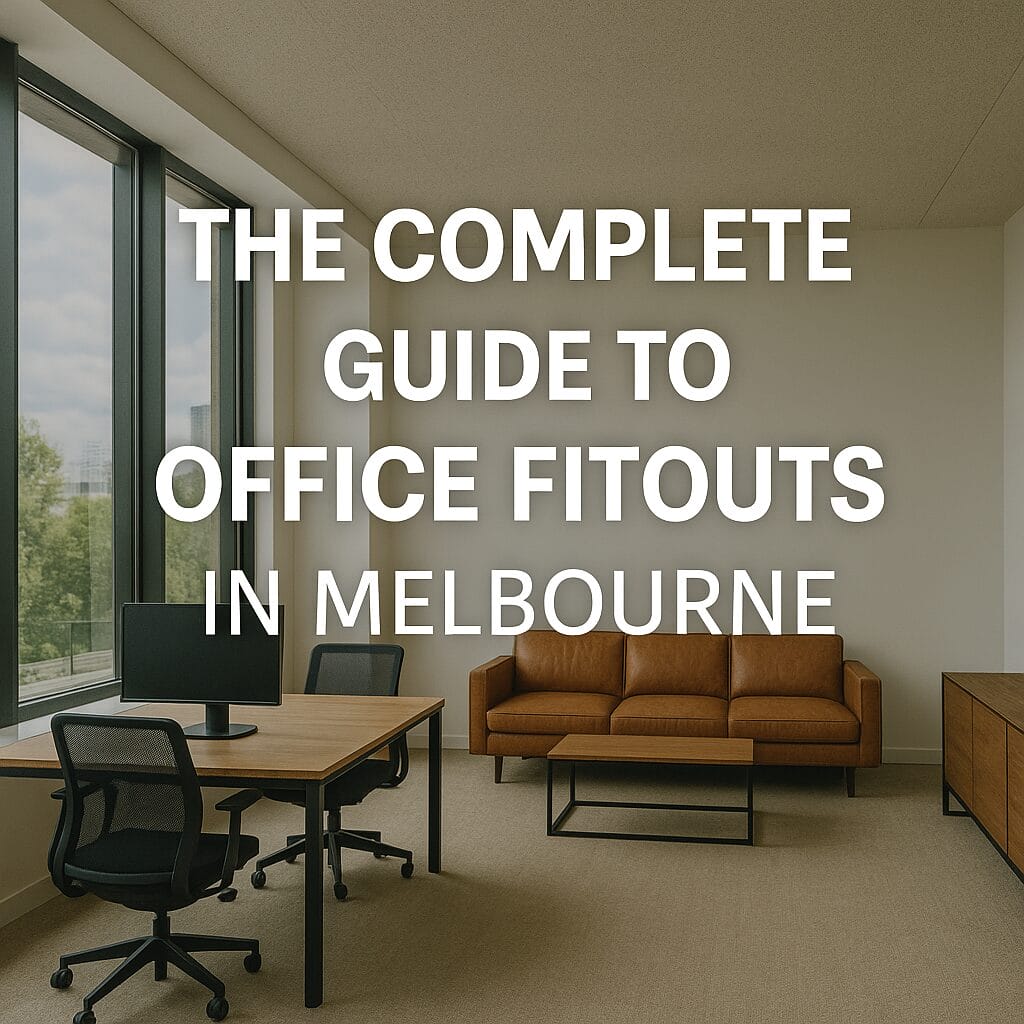
What is an office fitout?
An office fitout in Melbourne is the process of transforming an empty or outdated workplace into a functional, compliant environment that suits your team, technology and clients. It requires coordinated space planning, interior design, services integration and construction work — all aligned with Melbourne-specific requirements such as building surveyor approvals, ESM obligations, landlord rules and base-building engineering constraints. Depending on your lease and building, your project may involve:- Re-planning the layout for open work areas, meeting rooms and quiet zones.
- New workstations, joinery, kitchenettes and storage.
- Services changes to lighting, air‑conditioning, power and data.
- New floor coverings, ceilings and internal partitions.
- Feature elements such as reception desks, signage and acoustic treatments.
- Design and Construct (D&C), where one contractor manages both design and delivery; or
- Traditional lump sum, where the design is completed first and then builders tender on a fixed scope.
Common types of office fitouts in Melbourne
Every business and building is different, but most projects fall into a few common categories.New office fitouts (Category B)
This is when you move into a new tenancy and require a complete fitout from a warm shell or speculative base build. In Melbourne’s CBD, Docklands, Southbank and fringe markets, this typically includes navigating base-building services rules, building surveyor processes and ESM requirements that influence layout, services and programme. New office fitouts typically include:- Full workplace strategy and space planning.
- All partitions, glazing and doors.
- Kitchens, breakout areas and amenities upgrades.
- AV, meeting technology and built‑in joinery.
Office refurbishments and upgrades
Refurbishments are common when your lease is renewed and the layout is mostly right, but the finishes and services are tired. This might include an office refurbishment in Melbourne that refreshes flooring, paint, lighting and key areas such as reception or staff breakout spaces.Lobby, façade and building upgrades
For building owners and managers, lobby upgrades and façade improvements are a powerful way to reposition an asset and attract quality tenants. These projects often run alongside tenancy fitouts so the whole building experience feels consistent from street to suite.Sector‑specific fitouts
Melbourne’s office market also includes specialist environments such as:- Professional services offices with high clients‑facing expectations.
- Government and community services accommodation.
- Tech, creative and co‑working spaces with flexible layouts.
- Health, education and not‑for‑profit tenancies with tailored compliance needs.
How much does an office fitout cost in Melbourne?
No two projects are identical, but most office fitout costs are driven by a predictable set of factors: size, quality level, services complexity and programme. Typical cost drivers include:- Size and density: Larger tenancies and tighter workstation spacing change services loads and circulation requirements.
- Base‑building condition: Older buildings may need more services upgrades, fire‑rating or access improvements.
- Level of finish: Premium reception areas, custom joinery and feature ceilings add cost but create impact.
- Services changes: Moving air‑conditioning, fire services or main switchboards is more complex than only altering partitions and finishes.
- Timeframe and access: After‑hours work, staged construction and tight deadlines affect preliminaries and labour.
Key stages of an office fitout project
A successful office fitout follows a clear, staged process. Understanding each step helps you brief consultants, compare proposals and keep control of time and budget.1. Briefing and workplace strategy
The first step is to clarify why you are doing the project and what success looks like. This usually involves:- Interviews or workshops with leadership and key teams.
- Reviewing existing workplace issues and growth forecasts.
- Defining work modes: focus, collaboration, social and client.
- Establishing non‑negotiables such as desk numbers, meeting room ratios and storage.
2. Test fits and concept design
Once a shortlist of buildings or tenancies is in play, test fits help you see how your requirements work in each space. Concept design then develops look‑and‑feel, materials, feature joinery and preliminary services strategies. At this stage you can shortlist a design and construct office fitout partner in Melbourne and test different options for cost, programme and staging.3. Approvals, permits and landlord consent
Most Melbourne office projects need some combination of:- Landlord approval of plans and finishes.
- Building surveyor review and building permit for structural or code‑related changes.
- Services approvals from base‑building engineers.
4. Detailed design and value management
When the concept is agreed, detailed design resolves all the information needed for permits and construction. This stage typically covers:- Partition layouts, glazing, doors and hardware.
- Power, data and lighting layouts coordinated with furniture.
- Mechanical changes for air‑conditioning and ventilation.
- Fire services, sprinklers and detection devices.
- Detailed joinery drawings for reception, kitchens and storage.
- Finishes schedules for flooring, paint, tiles and feature elements.
5. Procurement and construction
Once approvals and documentation are in place, the fitout builder mobilises on site. For a typical Melbourne office this might involve:- Site establishment and protection of existing finishes.
- Demolition of partitions, ceilings and redundant services.
- New framing, glazing and doors.
- Services rough‑in for electrical, mechanical, plumbing and data.
- Installation of ceilings, floor finishes and joinery.
- Painting, feature lighting and final fixtures.
6. Testing, commissioning and handover
As construction finishes, the team completes:- Testing and commissioning of air‑conditioning, power, lighting, AV and fire systems.
- Final building surveyor inspections and occupancy sign‑off where required.
- Defects inspection with the client and rectification works.
- Handover of manuals, warranties and as‑built documentation.
Timelines: how long does an office fitout take?
Timelines vary widely, but a practical guide for many Melbourne projects is:- 2–4 weeks: briefing, test fits and concept design.
- 3–6 weeks: detailed design, approvals and pricing.
- 6–12 weeks: on‑site construction, depending on size and complexity.
- 1–2 weeks: commissioning, inspections and move‑in.
Compliance, safety and approvals in Victoria
Office fitouts need to align with the National Construction Code, relevant standards and Victorian requirements. Your building surveyor typically advises on what applies. That usually means:- Building surveyor approvals and certification
- Alignment with essential safety measures (ESM)
- Base-building engineer sign-off for mechanical, electrical and fire changes
- Landlord design review cycles in CBD towers
Design trends shaping Melbourne offices
Flexible, hybrid‑ready layouts
Many Melbourne businesses are rethinking their offices for hybrid work. Instead of rows of fixed desks, fitouts now prioritise:- Shared team benches with bookable hot‑desking.
- Project rooms and war rooms.
- Focus booths and acoustic phone rooms.
- Informal collaboration spaces in place of under‑used meeting rooms.
Wellbeing, light and biophilic design
Access to natural light, greenery and comfortable breakout areas is now an expectation, not a luxury. Popular inclusions include:- Indoor planting and green walls.
- End‑of‑trip facilities, showers and secure bike storage.
- Calm, comfortable quiet zones away from high‑traffic areas.
Brand‑led reception and client spaces
In a competitive professional services market, the reception and client suite often carry more weight than the number of square metres. Feature joinery, integrated signage, quality finishes and carefully planned lighting are all tools to express your brand and create a strong first impression.How to choose the right office fitout partner in Melbourne
The choice of builder can make or break a project. When reviewing proposals for your office fitout in Melbourne, consider:- Experience with similar project scale, sector and building type.
- Ability to deliver design and construct services end‑to‑end.
- Proven safety, quality and environmental processes.
- Transparent costing and reporting, including allowances and exclusions.
- Depth of local subcontractor relationships in the Melbourne market.
- Practical communication style that suits your leadership team.
Why choose O’Neill’s Design & Construction for your Melbourne office fitout?
Choosing a fitout partner is not just about who can install partitions and carpet. It is about who can protect your programme, budget and reputation while delivering a space your team is proud to work in. Here is how O’Neill’s Design & Construction supports Melbourne businesses:- Tier‑3 head contractor, not a subcontractor: You deal directly with the decision‑makers responsible for safety, quality and delivery across the full project.
- End‑to‑end service: From early contractor involvement and feasibility through to design and construct, lump‑sum delivery and after‑care, your project is managed under one accountable team.
- Melbourne office fitout specialists: Experience across CBD towers, fringe offices and suburban workplaces means the team understands local building management requirements and subcontractor networks.
- Tenant, landlord and superintendent friendly: Clear reporting, practical site management and proactive communication help keep all stakeholders aligned and reduce friction during construction.
- Proven project outcomes: Completed projects across workplaces, government, health and community spaces demonstrate the ability to deliver high‑performing environments on time and on budget.
- Future‑ready thinking: Designs prioritise flexibility, growth and technology so you are not locked into a layout that dates quickly.
Frequently Asked Questions about Melbourne office fitouts
How early should we start planning an office fitout before a lease expiry?Ideally you should begin planning 6–9 months before your lease expiry or relocation date. This gives time to review options, complete test fits, secure approvals and build a realistic construction programme. Leaving decisions too late often compresses the schedule and increases risk and cost.
Do we need a building permit for an office fitout in Melbourne?
Many internal office works require a building permit, especially if they affect fire services, egress paths, structural elements or amenities. Your fitout builder or building surveyor can confirm what is needed for your project and coordinate documentation and approvals with the Victorian Building Authority framework.
What is the difference between an office refurbishment and a full fitout?
A refurbishment usually refreshes an existing layout with new finishes, lighting and minor services changes, while a full fitout may re‑plan the entire space, relocate services and introduce new partitions, joinery and meeting rooms. Refurbishments tend to be faster and lower cost, but full fitouts provide more flexibility to support new ways of working.
Can we keep operating while the office fitout is underway?
Yes, many Melbourne office fitouts are staged so teams can continue working. This might involve after‑hours work, temporary swing spaces or phasing the construction floor by floor or zone by zone. Early planning with your fitout partner is critical to minimise disruption and protect safety.
How can we manage noise and disruption for neighbours in our building?
Good site management, clear communication and respect for building rules make a big difference. Your contractor should coordinate noisy works during approved times, use protection and hoardings where required, keep shared areas tidy and communicate planned disruptive activities with building management and neighbours.
What information do you need from us to provide a meaningful proposal?
To prepare a tender‑quality proposal, a fitout builder typically needs: your draft or final lease, any base‑building plans, a clear headcount and growth forecast, key functional requirements (meeting rooms, specialist spaces), preferred timeframe and budget range, and any landlord or corporate design standards.
How do we avoid budget blowouts during an office fitout?
The best protections against budget blowouts are a clear brief, thorough documentation, realistic allowances and transparent communication. Choosing an experienced design and construct contractor, locking in key decisions early, and allowing contingency for unknowns all help keep the project on track.
Are sustainable materials and practices more expensive?
Not always. Some sustainable choices, like efficient lighting and smart controls, can reduce long‑term operating costs. Others, like certain certified timbers or recycled finishes, may cost more upfront but add value for staff wellbeing and ESG reporting. A good fitout partner will present options so you can balance sustainability, performance and budget.
How long will our team need to be out of the office?
Time away from the office depends on the scale of work and whether staging is possible. Smaller refurbishments may be completed with limited disruption, while major structural or service changes could require temporary relocation. Your builder should outline staging and occupation impacts as part of the programme.
What makes O’Neill’s Design & Construction different from other Melbourne fitout contractors?
O’Neill’s Design & Construction operates as a tier‑3 head contractor focused on commercial office environments, combining hands-on delivery with director-level involvement on live projects. The team emphasises clear communication, practical programming and quality craftsmanship, aiming to create workplaces that reflect each client’s culture and support long‑term performance.